

No products in the cart.
New Vineyard Plantings to Match Earth’s Contours

New Vineyard Plantings to Match Earth’s Contours
On Diemersdal, innovation is not limited to the approach to winemaking in the cellar. When it comes to farming our vineyards, new ways are constantly sought to achieve the finest expression of terroir, for as it is said: “Wine is made in the vineyard.”
A recent innovation saw a 4.5ha Sauvignon Blanc vineyard planted along the contour lines of a spread of earth next to the entrance to Diemersdal Estate. With each vine attached to its own stake, this vineyard looping along the geographical contour exposes the whole vineyard to a number of geological and climatic factors aiming for an expression of pure, natural terroir in the resulting wines.
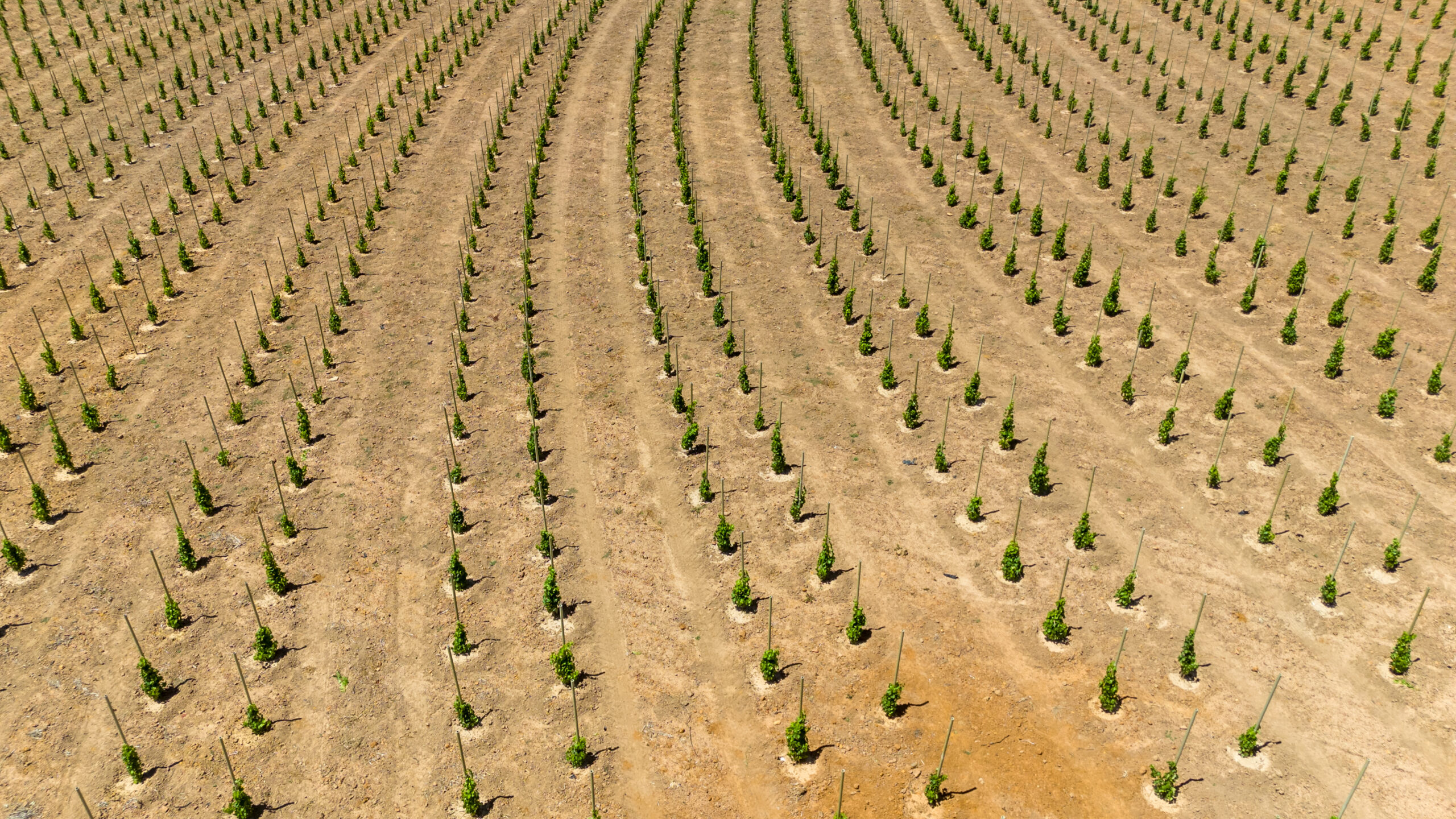
For one, contour planting helps reduce soil erosion by following the natural contours of the land, which slows down water runoff and allows more water to infiltrate into the soil. This method of vineyard planting also promotes better water management as the rows can capture rainwater, reducing runoff and helping maintain soil moisture levels. And this is especially important on Diemersdal where all farming is done dryland, without any irrigation and the vineyards totally dependent on and exposed to rainfall.
By minimizing erosion and promoting water retention, contour planting contributes to soil conservation, preserving the vineyard’s productive capacity over the long term. This practice can also create different microclimates within a vineyard, possibly improving grape quality by offering varied conditions for vine growth.
Concerning sustainability, contour planting can help promote biodiversity by maintaining varied habitats within the vineyard landscape. Overall, this approach contributes to more sustainable vineyard management, enhancing resilience to climate variability and promoting long-term ecosystem health.
This unique vineyard was planted last year, so in two years’ time the first grapes will be harvested for winemaking, and we are eagerly awaiting the results of this innovation from Diemersdal.


